Canadian Luxury Real Estate Sales Double, Triple in Some Markets

Pandemic accelerated value of home ownership at luxury price points to new heights in major Canadian centres in 2021

Demand for Canadian luxury real estate shifted into high-gear from coast to coast in 2021 as both domestic and non-resident consumption of tangible assets, such as homes, reached new levels, according to a report released today by RE/MAX Canada.

“The currency of home ownership has clearly taken on a new dimension in 2021,” says Christopher Alexander, President, RE/MAX Canada. “Canadians are moving to secure their future. The pandemic fuelled a run on real estate that has encompassed every segment of the market, and the value of housing has increased exponentially as a result–not only as a form of shelter but a desirable asset class that provides an attractive return on investment.”

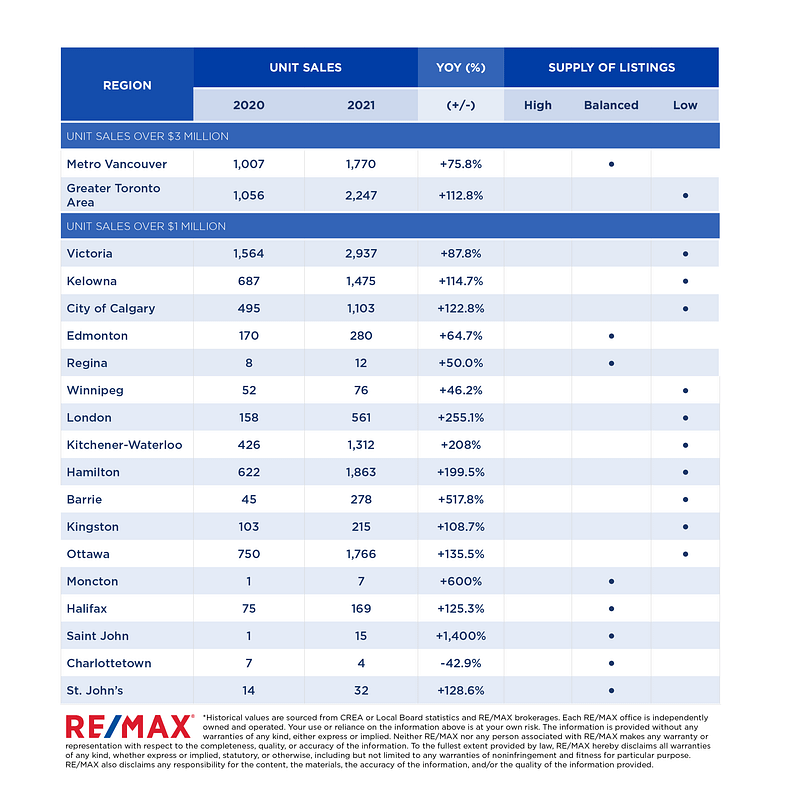
The RE/MAX 2022 Luxury Market Report examined Canadian luxury real estate trends and developments in freehold and condominium sales over $3 million in Metro Vancouver and the Greater Toronto Area (GTA), and tracked sales over $1 million in 17 additional markets including Victoria, Kelowna, Edmonton, Calgary, Regina, Winnipeg, London, Kitchener-Waterloo, Hamilton, Barrie, Kingston, Ottawa, Halifax-Dartmouth, Moncton, Saint John, Charlottetown and St. John’s.

According to an analysis of sales provided by RE/MAX brokers and agents based on local real estate board data, RE/MAX Canada found that 18 of the 19 markets recorded percentage increases in the double and triple digits. The greatest appreciation occurred in smaller urban markets such as Barrie, London, Kitchener-Waterloo and Hamilton, where sales of homes priced over $1 million have climbed 517.8 per cent, 255.1 per cent, 208 per cent and 199.5 per cent respectively. Canada’s largest markets for luxury product – the Greater Toronto Area and Metro Vancouver – experienced increases of 112.8 per cent and 75.8 per cent respectively for homes over the $3-million price point, while transactions of homes priced over $10 million rose a substantial 156 per cent and 167 per cent respectively. The only outlier was Charlottetown, where sales over $1 million declined to four units, down from seven unit sales one year earlier.

“As high as these numbers are, we believe they just scratch the surface,” says Alexander. “In our view, these levels likely do not truly reflect what is happening in markets across the country, given an abundance of exclusive sales and in white-hot markets such as Toronto, instances of private sales where buyers approach sellers whose listings have expired.”

Last year marked the continuation of a pandemic-fuelled buying spree that started in 2020, shattering existing records for Canadian luxury real estate sales and in some instances, price points from coast to coast.

“Despite a third and fourth wave of Covid-19 in 2021, real estate markets continued to rattle and hum,” says Elton Ash, Executive Vice President, RE/MAX Canada. “Tight inventory levels were prevalent in at least half of the markets we surveyed and contributed to an uptick in values across much of the country.”

RE/MAX brokers who were surveyed for the report attributed the increase in luxury activity to abundant economic drivers, as the national roll-out of the vaccines continued. Stock markets rallied, with the TSX, the S&P and the Nasdaq reporting some of their best years on record. Interest rates remained at historically low levels. GDP growth for the year is estimated at 4.5 per cent in 2021 as businesses returned to pandemic norms–including hybrid schedules—restaurants, bars, gyms, sports venues and theatres finally opened their doors.

Trade-up activity was brisk in most markets, as buyers cashed in on substantial equity gains realized when selling their existing properties.

“More so than ever before, it appears that buying a home is a retirement strategy, which many people believe will help the next generation achieve home ownership,” says Ash.

Real estate has traditionally been an essential asset class in the investment portfolios of ultra-high net worth individuals, usually comprised of multi-unit residential, commercial, industrial, and land. Residential performance, however, has been undeniable over the past decade, and that has generated global attention. Financial communities have also tapped into the trend, with Real Estate Investment Trusts (REITs) now investing in single-family residential housing in the US and to a lesser extent, Canada.

Canadian Luxury Real Estate Highlights

  • Luxury home-buying activity is spilling into smaller centres where the dollar goes further. While the pandemic accelerated the trend, bigger bang for the buck is likely to continue to draw purchasers from larger centres, particularly in Ontario. Inventory is reaching critical levels in markets like London, Kitchener-Waterloo, Hamilton, Barrie, Kingston and Ottawa.
  • Home sales are pushing into higher price points across the country. The luxury segment over $3 million represents approximately four per cent of total sales in Metro Vancouver and 1.8 per cent of sales in the GTA. Sales over $1 million in Halifax-Dartmouth represent 2.2 per cent of total sales.
  • Records were broken for luxury sales over $3 million in the Greater Toronto Area in 2021, while Metro Vancouver fell short of 2016 record levels by just over 200 sales.
  • Condominium sales over the $3 million price point in the GTA and Metro Vancouver have rebounded from 2020, setting a new record in the GTA and matching the existing record set in 2016 in Metro Vancouver. The GTA saw 106 condominium units sold in 2021, an increase of 82.8 per cent over 2020 levels, while 144 units changed hands in Metro Vancouver, up 44 per cent over the previous year.
  • RE/MAX brokers have reported an upswing in non-resident buyers in Metro Vancouver and Halifax-Dartmouth in 2021, however domestic buyers continue to drive luxury sales in the Greater Toronto Area.
  • An increase in young entrepreneurs has been noted in the GTA, with some utilizing crypto-currency gains to make their way into the housing market. Family wealth has also contributed to the increase in luxury home sales, with many parents freeing up the reins so the kids can enjoy the fruits of their labour.
  • Non-resident buyers are returning to Canada’s residential housing markets, despite the existence of three taxes aimed at foreign ownership in Metro Vancouver – the 20-per-cent Foreign Buyer Tax, the two-per-cent Speculation and Vacancy Tax (SVT), and the three-per-cent Empty Home Tax and the 15-per-cent Non-Resident Speculation Tax targeting sales in Ontario’s Greater Golden Horseshoe Area.
  • Sales of building lots have declined at the top end as buyers are reluctant to embark on construction when costs are unclear, labour is hard to find, and supply chain disruptions can add years to the custom-building process.
  • Inventory is balanced over the $3 million price point in Metro Vancouver while just 200 such homes are currently listed for sale in Toronto proper. Supply levels are exceptionally low in 50 per cent of markets surveyed for this report, including the GTA, Victoria, Kelowna, London, Kitchener-Waterloo, Hamilton, Barrie, Kingston and Ottawa.

About the 2022 Luxury Market Report

The 2022 RE/MAX Canada Luxury Market Report analyzed 19 Canadian luxury real estate markets, using data and insights supplied by RE/MAX brokerages. RE/MAX brokers and agents were surveyed on market activity and local developments based on local real estate board data and market activity in 2020 and 2021.


Jan 27, 2022
Background Image

Agent Image
Brian Toth
B.H.K., B.Ed., B.Comm, Broker

Contact Information

E-mail Address:

Office Phone:

Cell Phone:
About
Brian is Broker with RE/MAX Advantage Realty and is a leader in the, London Ontario and Area Real Estate Community. Brian epitomizes integrety, hard work and creative service in every detail of your Real Estate Transaction.

Recent Blog Posts

Apr 14, 2026

With Canada’s population aged 85 and older growing at the fastest rate of any age group, more families are facing important decisions about how and where their loved ones should live as they age.

While assisted living or downsizing are often seen as common next steps, many seniors want to remain in their homes, provided the space is adapted to meet their changing needs.

With thoughtful planning and targeted upgrades, aging in place can support both independence and quality of life, but sometimes downsizing is ultimately the way to go.

We’ll go over a few things you can do to keep your elderly parents in their home, and give you some tips to know when it’s best to find them a new living arrangement.

Common issues seniors face at home

As our parents get older, the homes they’ve loved for years don’t always meet their changing needs. If you’re starting to think about how to make their space safer and more comfortable, see if they are struggling with any of the following:

  • Falls on stairs or uneven surfaces – Reduced mobility and balance issues make stairs and cluttered hallways very hazardous.
  • Bed and chair falls – Getting in and out of beds or chairs can be challenging, especially without supporting furniture.
  • Bathroom safety – Showers, tubs, and toilets are common areas for slips and falls.
  • Heavy lifting and chores – Tasks like laundry, cleaning dishes, and carrying groceries have more hazards than common.
  • Door and home security – With an increase of technology in the home, remembering alarm codes or managing locks can become confusing and increase vulnerability.
  • Outdoor maintenance – In Canada, things like snow removal, lawn care, and other yard tasks can be physically demanding and dangerous without assistance.
  • Memory and daily reminders – Seniors may forget to turn off appliances, lock doors, or take medications, creating safety hazards.

These issues are often underestimated until something goes wrong as most seniors do not pre-plan as they tend to be reactive.  If they face a fall or health challenge then the big decision becomes , "Do they renovate? or put ramps or chair lifts on the stairs?"

Turning challenges into solutions for seniors who want to live at home

That being said, each problem also points to opportunities for home-based solutions.

  • Bathroom safety upgrades – Upgrades like walk-in showers, grab bars, raised toilet seats, and non-slip flooring can prevent the majority of bathroom-related accidents.
  • Stairs and mobility aids – Consider installing handrails on both sides of staircases, using non-slip treads, or even adding a stair lift to significantly reduce fall risks.
  • Smart home technology – Motion sensor lights, medial alert systems and smart locks make daily life safer and simpler. To avoid any confusion with new technologies, a lot of these devices can be automated or monitored remotely.
  • Declutter and adapt space – Widening hallways, removing obstacles and choosing supportive furniture prevent unnecessary falls, while allowing seniors to move freely within their own hom.
  • Outdoor maintenance – Hiring seasonal services for outdoor maintenance reduces physical strain and fall hazards.


When staying at home is proving to be too hard, is it time to downsize?

Sometimes, despite our best efforts, there may come a time when making those renovations may no longer be of help. Frequent falls, difficulty managing tasks, costly renos, cognitive decline, or social isolation may signal the need for downsizing or assisted living.

In times like these, connecting with a REALTOR® can help ease some of your worries and be your best course of action. Beyond logistics, one of the most overlooked aspects of aging at home is the emotional attachment seniors have to their space.

For instance, making a bedroom out of the dining room so they don’t go upstairs — for the senior, that’s the dining room. That means no more large family gatherings. It’s emotional. These decisions, require sensitivity and open communication. 

Families need to start talking and thinking about this early on to evaluate families' options, identifying accessible properties and making the sale and transition process that much simpler.  Planning ahead allows for better decisions to find them a suitable new living arrangement.  


...
Apr 13, 2026

Spring is the perfect time to refresh your home, and this year’s interior design trends are all about warmth, personality, and natural beauty. Across Canada, homeowners are leaning toward décor that feels relaxed, layered, and inspired by nature.

From textured materials to earthy colour palettes, Spring 2026 home trends focus on creating spaces that feel welcoming and lived in. Whether you’re updating your home for the season or preparing to list your property, these design ideas can help elevate your space. Looking for more inspiration? 

Below are four of the biggest spring interior design trends and simple ways to incorporate them into your home.

Natural Textures Bring Warmth and Depth

One of the defining home décor trends for 2026 is the return of natural textures. Instead of sleek, highly manufactured finishes, homeowners are gravitating toward materials that feel organic and tactile.

Popular materials this spring include:

  • Reeded wood furniture
  • Woven baskets and wall décor
  • Rustic stone surfaces
  • Limewash or textured wall finishes
  • Linen and natural-fibre textiles

These elements add depth to a room while creating a calming atmosphere. A reeded wood coffee table, woven pendant light, or textured throw blanket can instantly warm up a living space. For homeowners preparing to sell, incorporating natural textures can also improve listing photos by making a space feel more inviting and move-in ready.

Layered Décor Creates a Collected Look

Minimalism has dominated interior design for years, but Spring 2026 design trends are embracing a more personal, layered aesthetic. Instead of sparse rooms, homeowners are styling spaces that feel curated and lived in. This look often combines:

  • Mixed patterns and textiles
  • Vintage décor and thrifted finds
  • Gallery walls with varied artwork
  • Decorative books and ceramics
  • A mix of modern and antique furniture

Layering adds character while allowing homeowners to showcase personal style. Travel souvenirs, heirloom pieces, or flea-market finds can help tell a story within the space. This approach also works well for sellers. Thoughtful décor layering can add warmth and depth without overwhelming potential buyers.

Earth Tones Led the Spring Colour Palette

If you’re planning a paint refresh, warm earth tones are leading the colour palette for Spring 2026.Nature-inspired colours are replacing cooler greys and stark whites with shades that feel softer and more welcoming. Trending hues include:

  • Olive green
  • Clay and terracotta
  • Sandy beige
  • Warm taupe
  • Soft caramel tones

These colours work beautifully in living rooms, bedrooms, and kitchens because they create a relaxed and grounded atmosphere. One popular pairing this season is olive green with warm beige or stone tones, which adds depth while keeping the space light and balanced. Even small touches, like throw pillows, artwork, or accent furniture can introduce these colours without requiring a full redesign.

Glass Accents Add Light and Balance

While textured materials bring warmth, glass décor introduces lightness and balance to a space. Glass furniture and decorative pieces help reflect natural light, which is especially beneficial in smaller rooms or darker spaces. Popular options include:

  • Glass coffee or side tables
  • Coloured glass vases
  • Sculptural glass lamps
  • Decorative glass bowls or trays

Soft green and blue glass accents are particularly popular this spring because they complement natural textures and earth-tone colour palettes. For homeowners staging their property, glass accents can elevate a room without adding visual clutter.

How to Incorporate Spring 2026 Home Trends

Refreshing your home for the season doesn’t require a full renovation. Small updates can make a noticeable difference. Here are a few easy ways to bring Spring home décor trends into your space:

Start with colour
Paint an accent wall in a warm tone like olive green, clay, or taupe.

Add natural materials
Introduce woven baskets, ceramic décor, or linen textiles for a layered look.

Style shelves intentionally
Combine books, pottery, and framed artwork to create visual interest.

Use glass to reflect light
Add a glass vase, lamp, or table to brighten the room.

Mix old and new pieces
Pair modern furniture with vintage décor to create a curated, timeless aesthetic.

Why These Spring Design Trends Matter for Sellers

If you’re planning to sell your home this year, following current interior design trends can help your property stand out. Simple updates like warm paint colours, textured décor, and thoughtful styling can make rooms feel more inviting in listing photos and during showings.  

The Bottom Line

The biggest Spring home trends focus on comfort, personality, and natural materials. Instead of rigid design rules, homeowners are embracing spaces that feel relaxed, layered, and authentic. By incorporating warm colours, organic textures, layered décor, and light-reflecting accents, you can create a home that feels both stylish and welcoming for the season ahead.

...
May 28, 2024

Divorce or separation are topics we never wish to contemplate, especially so when embarking on the journey of marriage or partnership. However, in our current society it is essential to clearly understand the legal aspects surrounding the matrimonial home. 

By staying informed and understanding the implications of this agreement, you can ensure you are aware of your rights and obligations. This also allows you to sit down with your partner to negotiate and ensure you are set up for success should a separation ensue. 

Whether you're newlyweds or have been together for years, comprehending what constitutes a matrimonial home and its implications can save you from potential legal complexities in the unforeseen future. 

WHAT IS A MATRIMONIAL HOME? 

In Ontario, the term " Matrimonial Home" refers to the property where a married couple ordinarily resides. It could be a house, condominium or an other type of residential dwelling. 

What distinguishes a matrimonial home from other properties is its unique legal status, governed by the Family Law Act ( FLA ) . 

HOW A COUPLE ENTERS INTO A MATRIMONIAL HOME? 

There are various ways found in the list below, in which a couple can enter into a matrimonial home.  

Joint Ownership : When both partners purchase a property together, regardless whether they financially contribute equally to the purchase price or mortgage payments, the property is considered a matrimonial home. 

Transfer or Gift:  If one partner owns a property before marriage or cohabitation and subsequently transfers ownership or makes it a gift to the other partner, the property can become a matrimonial home. 

Common Law Partners:  In Ontario, common law partners who have lived together for a certain period ( typically three years or more) can also have a matrimonial home, provided they meet the criteria outlined in the FLA. 

Designation by Court:  In some instances, a court may designate a property as a matrimonial home, even if it doesn't fit the traditional criteria, to ensure fairness in property division during separation or divorce. 

THINGS TO CONSIDER WHEN ENTERING INTO A MATRIMONIAL HOME

A matrimonial home holds both familial and emotional significances. Before diving into this chapter of your life, it's best to consider your options and take steps to ensure that. should you and your spouse separate, you are both set up for success and can proceed without any legal complications. 

Below you will find some key considerations we recommend reviewing: 

Legal Advice :  Before making any final decisions regarding your matrimonial home, it's crucial to seek legal advice from a qualified real estate lawyer who specializes in family law.  They can also provide personalized guidance based on your unique circumstances. 

Prenuptial Agreement:  Consider drafting a prenuptial agreement that outlines each partner's rights and responsibilities regarding the matrimonial home in the event of separation or divorce. While it may not be the most desirable or romantic topic, it can protect both parties from potential disputes. 

Financial Contributions:  Be transparent about your financial contributions to the matrimonial home, whether the initial purchase price, mortgage payments, or renovations. Keeping detailed records can help ensure a fair division of assets in the event of a separation. 

Future Planning:  Discuss your long-term goals and expectations for the matrimonial home with your partner. Whether you  envision staying in the property for several years or selling in the future. having open communication can prevent misunderstandings and conflicts later on. 


While contemplating the possibility of divorce or separation may not be pleasant, understanding the legal aspects of the matrimonial home is essential.  By familiarizing yourself with what constitutes a matrimonial home, how it can be created, and key considerations to keep in mind, you can navigate this aspect of real estate with confidence and peace of mind. 

Seeking professional guidance and having open communication with your partner is key to protecting your interests and ensuring a smooth transition, should the need arise.  


...
1
2
3
...
6